— Updated Oct.1, 2026: Same garden wisdom, fresh new voice! —
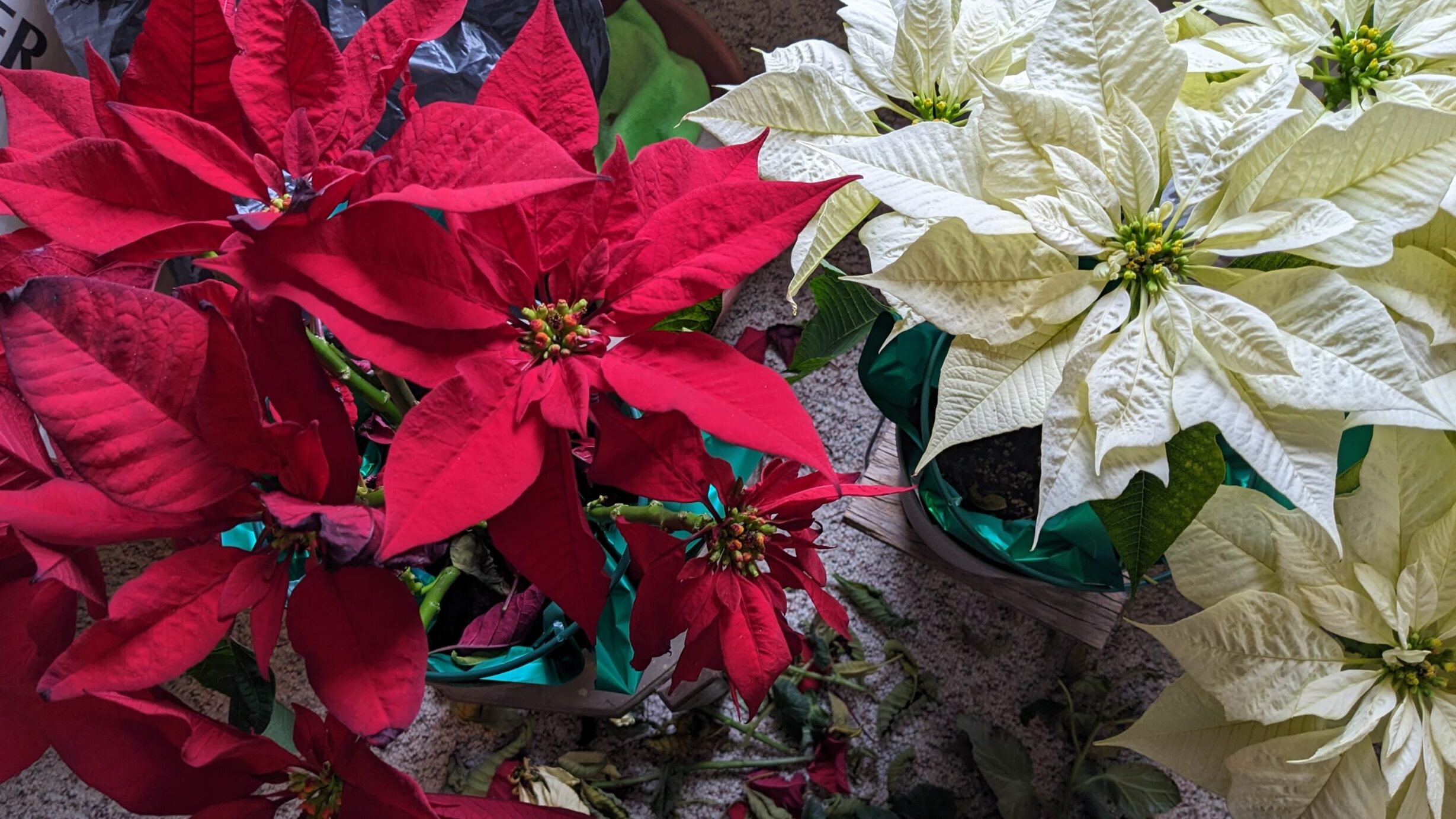
Poinsettia house plant care can be a puzzling story—especially when two plants arrive together, receive the same care, and then decide to behave completely differently!
This past holiday season, I received two beautiful poinsettias as gifts: one red and one white. They had travelled about 25 miles to reach me on a frigid –25°C winter evening, so I was already worried they had been on a bit of an Arctic expedition.
I carefully let both plants warm up before unwrapping them, hoping they would settle into their new home without too much drama.
But by the next day, leaves were drooping and falling. One poinsettia struggled badly, while the other carried on much better—leaving me trying to solve the mystery of what went wrong.
Poinsettias may look cheerful and festive, but they can be surprisingly fussy about cold, watering, light, and sudden changes.
In this post, I’ll share what I learned from caring for my two holiday divas, along with practical tips to help your own poinsettia stay healthy and colourful for as long as possible.-
Choosing a Healthy Poinsettia
Normally, I enjoy choosing my own poinsettia. I can spend far too long at a greenhouse comparing colours, sizes, and shapes—rather like a kid in a candy store, except I am shopping for plants!
This time, my poinsettias were gifts, so I did not get that chance. I was simply happy to receive them and hoped both would settle in nicely.
If you are choosing a poinsettia yourself, look for one with firm, colourful bracts and plenty of healthy green leaves. Check the tiny yellow flowers in the centre too. When they are still closed or just beginning to open, the plant is usually fresher and should last longer indoors.
Avoid plants with drooping leaves, yellowing foliage, or damaged bracts. A poinsettia may look lovely from a distance, but a closer look can save you from bringing home a holiday diva already having a bad day!
Before You Water, Check the Pot
Before giving a new poinsettia a drink, take a quick look at the pot and its wrapping. Poinsettias are often sold in decorative foil or plastic sleeves, which look festive but can trap water around the bottom of the pot.
My two came dressed up for the holidays too, but that wrapping can hide an important detail: whether excess water has somewhere to go.
A poinsettia needs drainage. If water sits at the bottom of the pot, the roots can become too wet and the plant may begin dropping leaves.
It is always a good idea to lift the pot out of its sleeve or wrapping when you water it. Let any extra water drain away, then place it back on a saucer or in its decorative cover.
Rather than watering on a strict schedule, feel the top inch of soil first. If it feels dry, give the plant a good drink. If it is still damp, leave it alone for another day or two.
Poinsettias do not want to dry out completely—but they definitely do not want to sit there with wet feet either. Apparently, even holiday divas have standards!
Finding the Right Spot
Once watering is under control, the next challenge is finding the right place for your poinsettia. They like bright, indirect light, but they do not appreciate being blasted by hot sun all day.
A sunny room can work beautifully, as long as the plant is not pressed right up against a cold window. In our Manitoba winters, that cold glass and those sneaky drafts can be hard on a poinsettia.
Keep it away from outside doors, furnace vents, and any spot where the temperature changes suddenly.
Poinsettias are happiest in normal room temperatures—roughly 18–24°C during the day—with slightly cooler temperatures at night.
Nothing fancy is required. They simply like a comfortable, steady home, much like the rest of us in January!
It may take a little trial and error to find the best spot. If the leaves remain firm and the plant is holding its colour, you have likely found a place it approves of.
The Mystery of the Dropping Leaves
It was not until the next day that I could really see the damage. Both poinsettias had begun dropping leaves, but the red one was clearly struggling more than the white one.
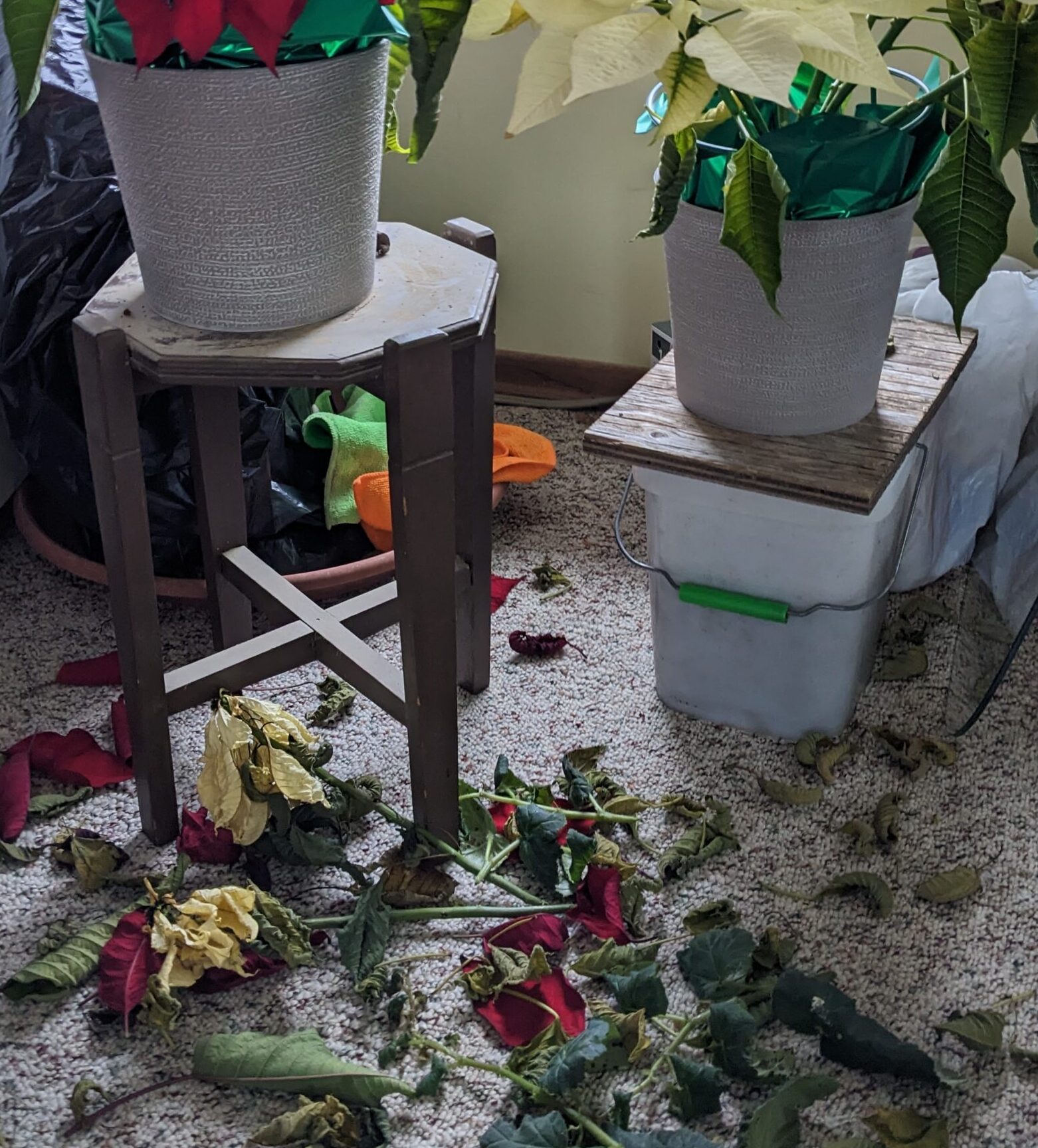
That is when I realized just how sensitive these plants can be. A poinsettia can react to a cold trip, rough handling, a sudden temperature change, too much water, or not enough water.
Sometimes the leaves begin drooping or turning yellow before they fall. Other times, the plant simply decides it has had enough and starts shedding leaves with no warning at all!
In my case, the cold trip and handling were likely the biggest problems. The red poinsettia lost several sections of leaves and eventually did not make it. The white one lost some leaves too, but she settled down once I found her a better spot and paid closer attention to her watering.
It was disappointing to lose one, but it also showed me that poinsettias can recover from a rough start—if they are given the right conditions.
The white poinsettia became my little success story, while the red one taught me a lesson about just how much drama can happen in one holiday plant display.
Why Poinsettias Can Be So Fussy
The more I learned about poinsettias, the more their dramatic behaviour began to make sense.
They are native to Mexico, where they grow outdoors in warm conditions and can become large, shrub-like plants—nothing like the neat little Christmas pots we bring home in December.
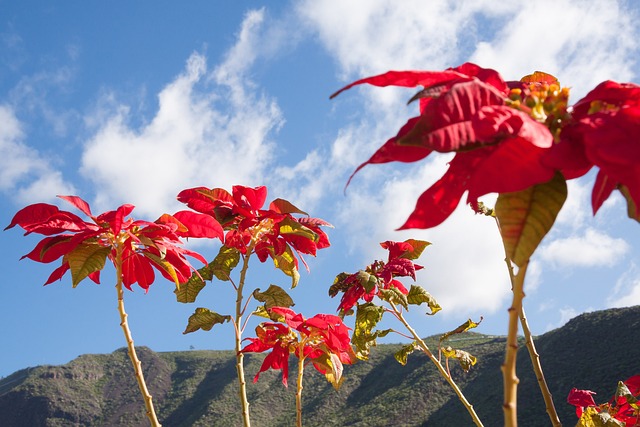
Their colourful red, white, or pink “flowers” are actually bracts, which are modified leaves. The real flowers are the tiny yellow centres. Those colourful bracts appear when the days become shorter and the nights become longer.
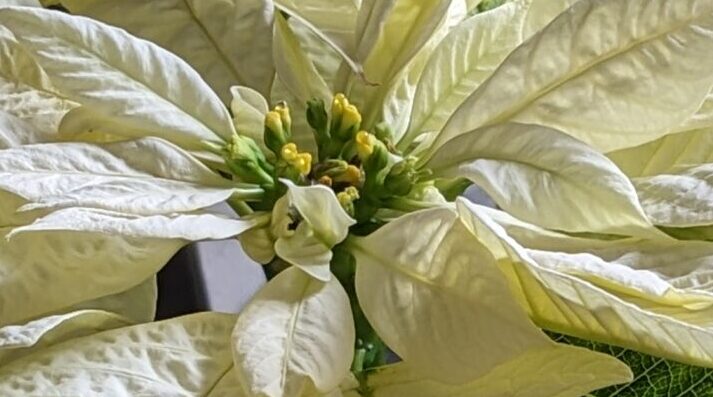
So, when we bring a poinsettia into a warm, dry Canadian home in the middle of winter, it is already far from its natural environment.
Add a cold trip, drafts, overwatering, or a dim corner, and it is no wonder they can become a little temperamental.
They may be holiday plants, but underneath all that festive colour is a tropical beauty that expects a bit of special treatment!
What Happens After Christmas?
Once Christmas is over, many people assume their poinsettia is finished too. And honestly, if it begins dropping leaves after the holidays, that does not always mean you have done something terribly wrong.
These plants often lose some lower leaves as they adjust to their home and the holiday season winds down.
My white poinsettia surprised me. After I found a spot she liked and started being more careful with watering, she continued looking healthy for several more weeks.
I kept her in her original pot and used a foil pie pan underneath to catch any extra water. Nothing fancy—just a better location, sensible watering, and a little patience.
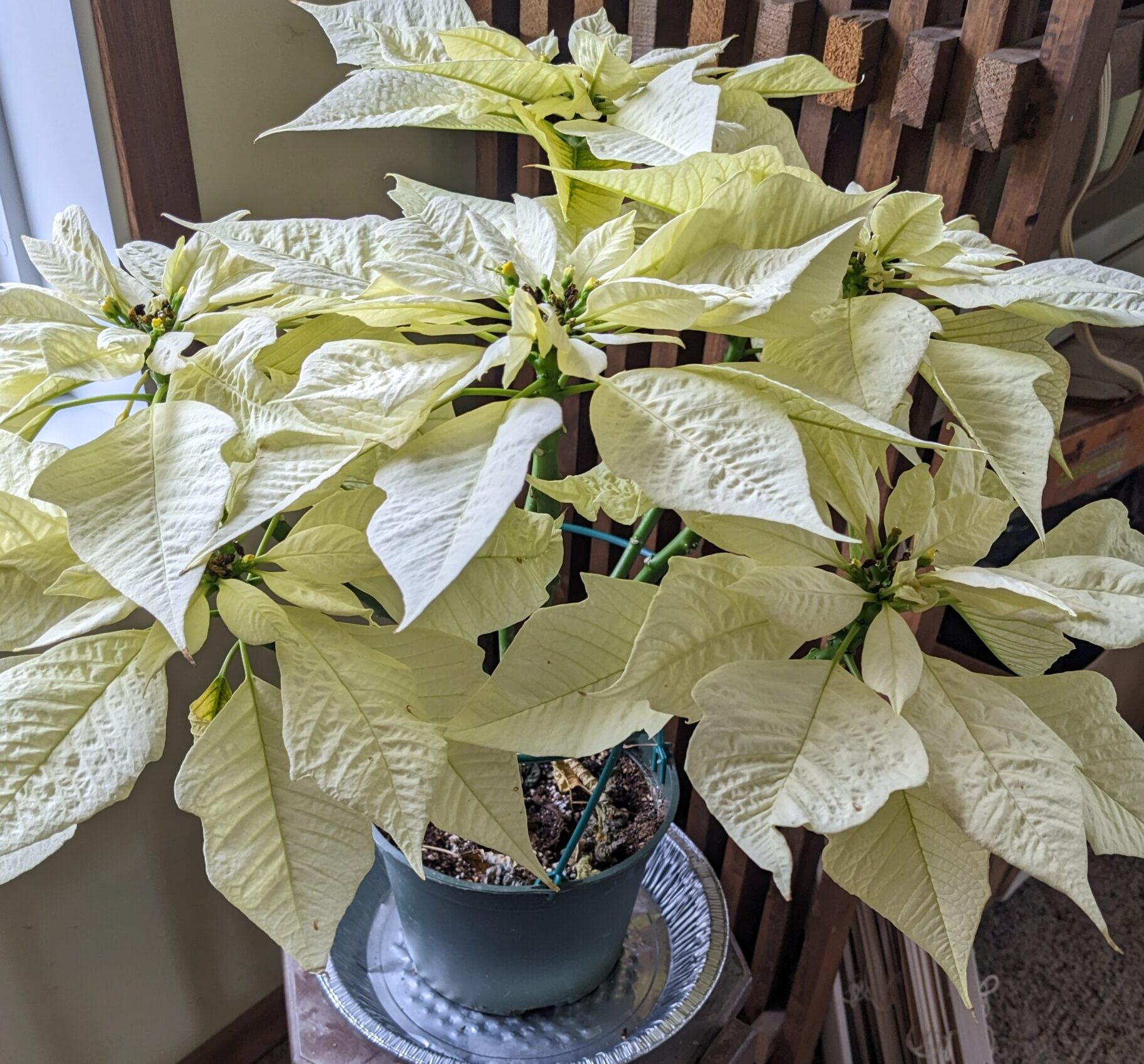
It is possible to keep a poinsettia alive well beyond Christmas. Getting it to turn colourful and bloom again the following year, however, is a different project altogether.
To rebloom, it needs about 14 hours of complete darkness every night for several weeks in the fall. Even a lamp turned on at the wrong time can interrupt the process.
Some indoor gardeners enjoy that challenge. Me? I decided it was perfectly fine to enjoy my poinsettia for as long as it stayed happy, then choose a fresh one for the next holiday season.
Sometimes buying a new plant is easier than trying to run a tropical boot camp in your house!
Final Thoughts
Caring for poinsettias can certainly be a puzzling story. My red and white plants arrived together, yet one struggled badly while the other settled in and carried on.
That experience taught me that these festive plants may look delicate, but a little patience, the right location, and sensible watering can make a real difference.
You may decide to keep your poinsettia going for as long as possible, or simply enjoy it through the holiday season and start fresh the next year. Either choice is perfectly fine.
The important thing is enjoying the colour and cheer it brings into your home—without expecting perfection from a plant that can be a bit of a diva!
Have poinsettias been part of your holiday season, or do they grow outdoors where you live?
Have you ever kept one going past Christmas—or had one put on a little holiday drama of its own?
I’d love to hear your experience in the comments!
Until next time—Happy Indoor Gardening!
Take care,
Barb